Beginner-friendly golf courses
Every course on this page is classified beginner-friendly from real course data, not marketing copy. The main signal is slope rating, the official measure of how much harder a course plays for a bogey golfer than a scratch golfer. Where a course publishes a slope under 120, it plays genuinely gentle: wider landing areas, shorter carries, and greens that don't punish a first putt. Where slope isn't published, we fall back to the course's par, total yardage and layout type.
Difficulty is only half of what makes a course good for new golfers. The other half is everything around the golf: whether you can hire clubs instead of buying a set, whether there's a driving range or putting green to warm up on, whether lessons are available on site, and whether the green fee makes an experimental first season affordable. Each listing below shows those amenities and the real weekday green fee, straight from the course's published data.
And you don't have to play alone: the tee times board is full of golfers who've tagged themselves beginner-welcome. Pick a course, find a round, and go play.

Clogher Valley
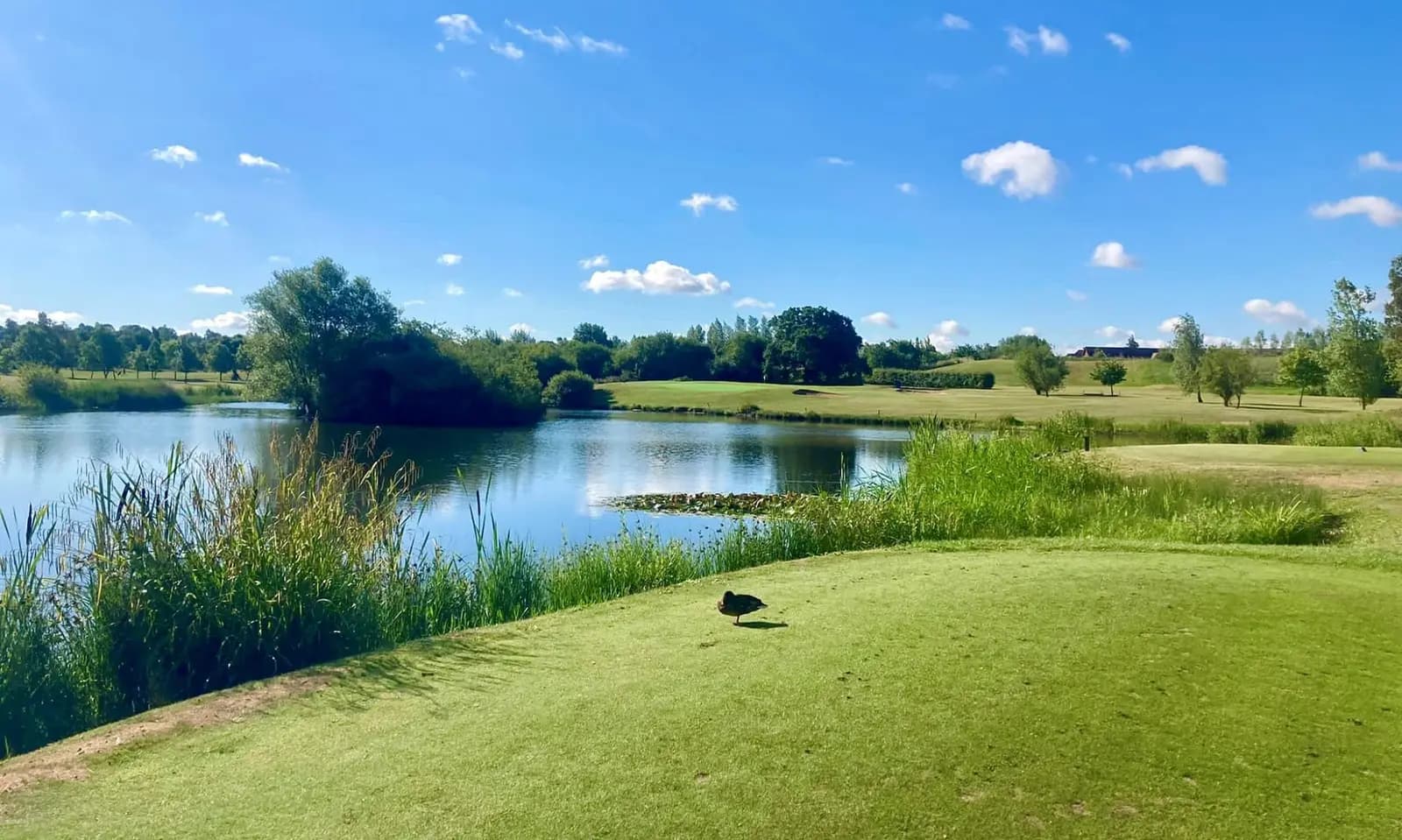
Horndon
Horndon/Langdon

Windermere
Frequently asked questions
What makes a golf course beginner-friendly?
The strongest signal is a low slope rating (we use under 120, where 113 is the neutral reference). In practice that means forgiving fairways, manageable length and gentler greens. Club hire, on-site lessons and a practice range matter almost as much for a first season.
Do I need a handicap or a club membership to play?
Usually not. Many UK courses welcome visitors on a pay-and-play basis; check the guest policy shown on each course page. You don't need an official handicap for a casual round.
How much does a round cost for a beginner?
Weekday green fees on the courses listed here start from the price shown on each card, and twilight tee times are often 20 to 40% cheaper. Nine-hole rounds, where offered, cost less again.
Can I rent golf clubs at the course?
Courses with club hire show a "Club hire" amenity on their page. If you're not ready to buy a set, filter for it. Hiring for your first few rounds is completely normal.